As noted in this post published on the next-to-last day of 2025, I have made the commitment to break away from the ordinary, seek out the unfamiliar, engage in something new. Or in other words, follow a different path, even if it’s a path I’ve been on before.
Okay, enough of my efforts to sort of wax poetic.
On the first day of February, after watching an enlightening CBS Sunday Morning episode and reading selected sections of the now diminished Chicago Tribune, I started my now 30-year-old Toyota Camry and drove 20 or so minutes south to a true treasure here in my home town of Chicago.
Below you will find images from my visit to the Garfield Park Conservatory, a more than century-old compound housing a dizzying and mesmerizing collection of things that grow. Strolling through the Conservatory can be equated in some respects to taking a trip around the world. In every exhibit, I found plants from every continent, well except for Antarctica. And, as an avid home gardener, I renewed my love of things that grow.
The venue was relatively crowded that Sunday, with families and couples enjoying the surroundings. Yet, I found plenty of places to stand alone, take it the beauty of the natural installations, and breathe in the warm, moist air.
What this experience also provided was temporary break from the highly troubling and disturbing things happening in my city, in my country, and in the world around me. The Garfield Park Conservatory, which I have visited in the past, is one of the aspects of Chicago that truly contributes to its position as a world-class metropolis. That day, it provided a place to rejuvenate.
Rest assured: There are many other iconic places in Chicago that are just a short ride or public transit commute away. I plan to continue my quest to shatter the mold of sameness and explore what’s out there. It’s a proven way to help cope with the growing madness these days.
The main passage connecting the different sections of the Conservatory was “enlightening” in more ways than one. Look close: Yes, those are live fish. A great place to sit and rest while at the Conservatory is on one of the ledge formations; but as noted, keep your feet off. Use your imagination. Imagine you are in a rainforest or jungle. Yes, that can happen at the Conservatory. Man, those are really, really tall cactus plants!Not sure what kind of tree this is, but hey, it’s tall and it’s beautiful. This man-made piece of art seems to “embrace” the natural treasures at the Conservatory. Currently under some renovation, the Conservatory is still welcoming from the outside.
Dr. Em Hall, waiting for the next L train while on the platform at the CTA 51st Street Green Line station.
By Edward M. Bury, APR, MA (aka The PRDude)
Engaging with fascinating and intelligent people ranks as the most rewarding aspect of my current position managing communications (and more) for a major university transportation research unit. The subject of today’s Q&A profile certainly ranks way, way up there on my roster of interesting and way cool people.
I recall first meeting Dr. Em Hall some eight years ago when she joined our team as a research assistant. Since then, Em earned her doctorate degree, received the Dwight D. Eisenhower Transportation Fellowship, cultivated a side career as a group fitness instructor, and built Em + H Chicago LLC, a successful diversified strategic consultancy that centers on transportation, higher education, communications and product/project management. Oh yes: In 2026, Em will serve as President of the annual Transport Chicago conference. (Full disclosure: I have served on the Transport Chicago Steering Committee for a dozen years. Read this post from last June for some further insight.)
Okay passengers: Next stop, thoughts from Em Hall.
1. Your impressive career has centered on communications. What led you to pursue — and succeed — in this field?
Well, first of all, thank you for the compliment. My career path has been far from linear, and I certainly didn’t grow up to be the paleontologist I dreamed of becoming as a kid. However, I had an early boss who saw real potential in my writing skills and tapped me for a role in the marketing department at a nonprofit where I had started out in fundraising. While at that job, I became an early adopter of social media and blogging, which ultimately transformed the trajectory of my career. A little over a decade ago, I obtained a certificate in Integrated Marketing and Communications from the University of Chicago’s Graham School, which further developed my skills and expanded my network.
Looking back, that initial transition to marketing and comms made sense: I’d always loved writing and fancied myself an effective communicator from a young age. As I’ve continued to build my own business, which has evolved into focusing on communications for the transportation and urban planning sectors, I still draw on many of the fundamentals I learned from that early boss and the certificate program.
2. While maintaining your own consultancy and working in a full-time position, you decided to take on the challenge of earning your doctorate degree. What prompted you to make this personal and professional commitment?
If there’s been one constant in my life, it’s a love of transportation and trains in particular, for which I credit my dad. He was a top repairman for Lionel, so I grew up around model trains in the house, as well as real trains during family vacations. While living in DC after my first round of grad school, I had a short stint as a federal contractor. The most dull job in my life. I had downtime and decided to put it to good use by riding the DC Metro after work and on weekends, then writing up my adventures in blog posts during the day (yes, work was really that slow!). The blog became somewhat of a hit, and when I moved back to Chicago a few years later, the joy of exploring and writing about transit stuck with me. I realized that urban planning would be a great direction to take my career in, as I could utilize my marketing and communications skills in a different sector.
3. What was the greatest challenge you encountered while pursuing your doctoral degree? And, what advice or insight can you share with other scholars?
For those thinking about a Ph.D.: don’t do it! Ha – just kidding. I would say definitely do it, as long as you know your “why.” I applied and accepted, knowing that the academic path was unlikely to be the one I would pursue. My goal was to acquire subject matter expertise in an area that I was passionate about – transportation – that would enable me to pivot my consulting business to focus on that field. Is going through a Ph.D. program the most efficient way to make a career change? Absolutely not! But it worked for me because a) I have an ego and wanted to be called “Dr. Em” on occasion, and b) I was in the fortunate position to work for myself and could therefore control my time and workload in a way that made it possible to layer on another round of grad school.
The greatest challenge, without a doubt, was writing the dissertation. Not the words and sentences, per se, but just being able to sit down and put aside everything else (mostly work stuff) for extended periods of time in order to give the paper the focus it deserved. I ended up getting a co-working space for about six months in order to leave the house, turn off notifications, and give the dissertation work the deep focus it requires.
4. Your expertise centers on urban planning and transportation. Share three key issues facing urban planners in the years ahead.
From what I’m observing in my consulting work, the work of planners is more visible than ever. But that doesn’t mean that what planners do is necessarily well understood, which is where communicators like me come in! One trend I’m noticing, which is a positive one, is that planners and engineers are collaborating more than ever on transportation initiatives. And if they aren’t yet quite as in synch as they’d like to be, these two groups are making concerted efforts in both the public and private sectors to break down silos that, I would argue, have built up over time as those disciplines have diverged at the academic level.
Another issue is finding planners and planning opportunities in unexpected places. This is a good thing as well. For example, as part of a podcast I co-host for the American Planning Association, I had the opportunity to learn about the work of a pastor who is also a planner, focusing on how houses of worship can serve as anchor institutions and neutral meeting grounds for community planning discussions. She also calls those institutions to task for not always being the most generous neighbors in terms of land use and other planning practices. I think we’ll continue to see more of this.
In terms of transportation planning in particular, I’m already glued to my television, so to speak, on the topic of congestion pricing. We will likely see many dissertations on this topic in the next five to ten years, and I want to read them all.
5. Now to an entirely different topic. Sources tell me — okay, you’ve told me and I’ve visited your website — that you are a fan of Felis catus, better known as a domestic or house cat. Why the fondness for feline friends?
I think the real question is, why not? I’ve been a cat owner for two decades now, and through thick and thin, dissertations and deadlines, my cats have been an unwavering source of furry fun. They’re not much for riding public transit, however. That’s the only shortcoming I can think of.
A late-afternoon view of the Chicago skyline from Diversey Harbor. Without another person in sight, I had this perspective all to myself.
By Edward M. Bury, APR, MA (aka The PRDude)
Over the past week, the weather across metropolitan Chicago and much of the Midwest has been bleak. Cloudy skies, below-freezing temperatures, stiff winds, and some snow at times. Yes, it’s late December. Therefore, ideal conditions to hunker down and read, write, visit social media platforms, think about the year that’s passed and project on the year ahead.
But after a few days of shutting down and just hanging around, I felt it was time for an adventure of sorts. Well, certainly nothing hazardous, yet a definitive change from reading the novel I started a few weeks ago or viewing holiday messages and images on Facebook.
So, yesterday, on the Eve of New Year’s Eve, I hiked to the Logan Square Blue Line station and caught the arriving L train headed downtown. My goal: Walk around the Loop, observe people, take note of changes to retail outlets and the overall streetscape, visit Millennium Park, stop by the Chicago Cultural Center, hike up Michigan Avenue, enjoy a sandwich, then catch the CTA Sheridan 151 bus headed north. It was rather cold and blustery, but I was well dressed for the weather.
Certainly, this was a relatively pedestrian and unstructured plan. Yet, the five or so hours I spent proved memorable, inspiring, and quite invigorating.
Upon exiting the L at the Clark and Lake station, a fellow passenger inquired on which direction to take to get to City Hall. I welcomed the opportunity to walk a block west with the man to LaSalle Street, directing him to head south. “Thanks,” he said, shaking my hand. “I remember being able to get to City Hall from an underground route.” That’s from the Washington L station I noted.
Ah, time for a sandwich. Perhaps a visit to the McDonald’s in the Chase Bank Plaza at Monroe and Clark.! Upon arrival at the Plaza, once home to the now-gone First National Bank of Chicago, I learned the restaurant space was being converted to another retail use. Okay, maybe I’ll find a place for a sandwich on LaSalle Street one block west.
Strolling this once-vibrant and bustling center of finance and commerce, I noted the conversion of some office towers to hotels and apartment buildings, part of a city initiative to reclaim LaSalle Street as a pocket Loop neighborhood and provide vitality, bring in tax revenue, and offer affordable housing. LaSalle Street will be back, I thought.
At Madison Street, I stood in front of the One North LaSalle Street tower, where I worked for a year back in 1981 for a small financial advertising firm. (Learn more from this 2014 post.) The entrance still looks grand and definitive of business. I then ventured back east and came upon St. Peter’s Church. After entering, I realized a mass was underway; the church was relatively crowded for an early afternoon, so I stayed for a while to take in the eucharist prayer, the consecration, the Lord’s Prayer, the collection, the sign of peace, and the communion. I felt calm and warm (remember, it was cold outside) as I left the church and strolled west to Michigan Avenue.
Walking north, I encountered many visitors and locals taking in the grandeur of the avenue, with its iconic curtain wall on the west and Millennium Park to the east. I enjoyed watching people ice stake on the outdoor rink, pose for photos in front of the city’s official Christmas tree, and become enraptured by the Cloud Gate sculpture. (NOTE: I refuse to cite the silly nickname for the brilliant chrome work of art.)
At the Cultural Center, I intended to just find a seat and rest, but decided to explore the entire building. What a wise decision! Over its four floors, I took in various exhibits that centered on design and marveled at the overall splendor of the domes, staircases, and grand rooms. Plus, visitors get a terrific view of Millennium Park when looking east.
Walking north, I crossed over the Chicago River and entered what’s better known as Chicago’s Magnificent Mile, the stretch of North Michigan Avenue that embodies all that’s great about the city’s retail, dining, hospitality, and entertainment offerings. I shared the route with large groups of shoppers navigating the sidewalks, many toting purchases from nearby stores. People clearly were out to enjoy and celebrate and spend. There were at least 50 people waiting to enter the famous Starbucks Reserve Roastery, and nearly as many lined up outside the Harry Potter Shop.
Reaching Chicago Avenue, I marveled at the old Chicago Water Tower, a symbol of the city’s rebirth following the Great Fire. There’s a McDonald’s at State Street I remembered; now I’ll get that sandwich. But enroute, at Rush Street, I saw a Devil Dawgsshop, went inside and ordered a classic Chicago hot dog. Yes, no ketchup. As I stood in the window and enjoyed my delicious dog and a can of Pepsi, I immediately knew I made the right decision.
In front of Water Tower Place, which looked festive and busy, I waited for the Sheridan 151 bus. Here, crowds of visitors and shoppers emanated the holiday spirit; people were happy and engaging. The bus arrived in a few minutes and made its journey north along Michigan Avenue, to inner Lake Shore Drive, onto Stockton Drive and into Lincoln Park.
From my window, I could see traffic on Lake Shore Drive and Lake Michigan to the east and to the west historic and modern apartment buildings, parkland, and even some monuments. All are testimony to part of what makes Chicago a truly great city. At Diversey Avenue, I exited the bus and thanked the driver, who wished me a Happy New Year.
Before boarding the Diversey 76 bus west toward home, I walked to the edge of Diversey Harbor and gazed south for a few minutes, reveling in the Chicago skyline on that late winter afternoon. In summer, this part of the park would be bustling with people at the nearby driving range, at the tennis courts, at the small restaurant where I sometimes visit, and of course in boats moored in the harbor. But that day, I had it all to myself.
The end of my adventure, the 20-minute bus ride home, was uneventful. But I felt awakened, and I look forward to my next adventure, to another exploration of places that make Chicago, my home, a truly great world city.
Back in the day, a reporter might have had something else in his or her hand while on the job. What was it? Image courtesy of Freepik.
By Edward M. Bury, APR, MA (aka The PRDude)
First, a full disclosure statement: While I subscribe to various sources of current information and developments within the public relations profession, I don’t always stay too current on the state of the industry. Yes, I gain from interacting with selected social media posts, participating in webinars and in-person presentations, and reading publications like Strategies and Tactics from the Public Relations Society of America.
But given the amount of industry-focus (and of course, other) print and digital options these days, I frequently skip learning about the latest news regarding public relations. Now, home on a cold and bleak afternoon two days before the end of the year, I decided to allocate an hour or two to catching up with some online sources.
What really resonated with me was an article originally posted April 2 of this year in PR News. The piece, “When Making Your Pitch, Here’s What Journalists Value Most,” was part of a recap post of articles that address what arguably has been the foundation of public relations for decades — media relations. Writer Matt Petteruto does an excellent job of supporting his commentary by citing results from industry surveys of journalists and recommending that communicators research online media databases to identify qualified and appropriate reporters to direct the pitch message.
And, he reiterates the fundamental aspect of solid, effective media relations, which is make sure the reporter you are pitching “is a good fit before you make the pitch.” This can be considered an elementary factor, but it’s one worth reiterating!
Now, let me reflect further on the practice of media relations, as experienced by yours truly.
Back in the 1980s, well before digital communications, those of us working at agencies pitched reporters at local, regional and national newspapers, trade magazines, the major wire services, and television and radio regularly. We wrote pitch letters on a typewriter that were sent via US Mail or in some cases hand-delivered; this initiative was followed up with a phone call; news releases were distributed the same way.
Media targeted were identified by reputation and experience on a specific beat or through the Bacon’s Publicity Checker directory. What am I referring to? Here’s what a Google AI search found:
A massive, physical directory (think large books) containing names, titles, and contact info for editors, reporters, and columnists across various media.
Organized by publication type (newspapers, magazines) and industry (trade, consumer).
The search results also noted that the Bacon’s directory was a key tool from the 1950s into the early 2000s, made obsolete by online databases. Every PR agency worth its salt had a Bacon’s — or multiple copies — which by the end of the year looked somewhat ragged through multiple handing by various account teams. An aside: An eBaysearch for a Bacon’s did not reveal any results for a copy of the vintage directory, but showed many for collectible items related to the iconic entertainer Chubby Checker.
Personal interaction with reporters comprised one other aspect of media relations four or so decades ago. By this I refer to inviting the media member to lunch or sometimes dinner and using the time together to make the pitch. Was this practice in violation of any ethical standards? Possibly. Did it happen regularly? Most certainly.
Let me conclude with this thought on media and media relations. Decades ago, the world did not move or change at the rate it does today; this includes the media. Often, reporters covered the same beat at the same publication or broadcast outlet for years, and possibly decades. Relationships established and nurtured with members of the media could last a very long time. This may not exist at the same level these days, given the continued decline in print journalism and unbridled rise in digital media.
Regardless, strategic and effective media relations continues to be — and certainly will continue to be — a very fundamental and valuable component of public relations. A question for those who continue to employ media relations today: Do you ever take an influencer to lunch?
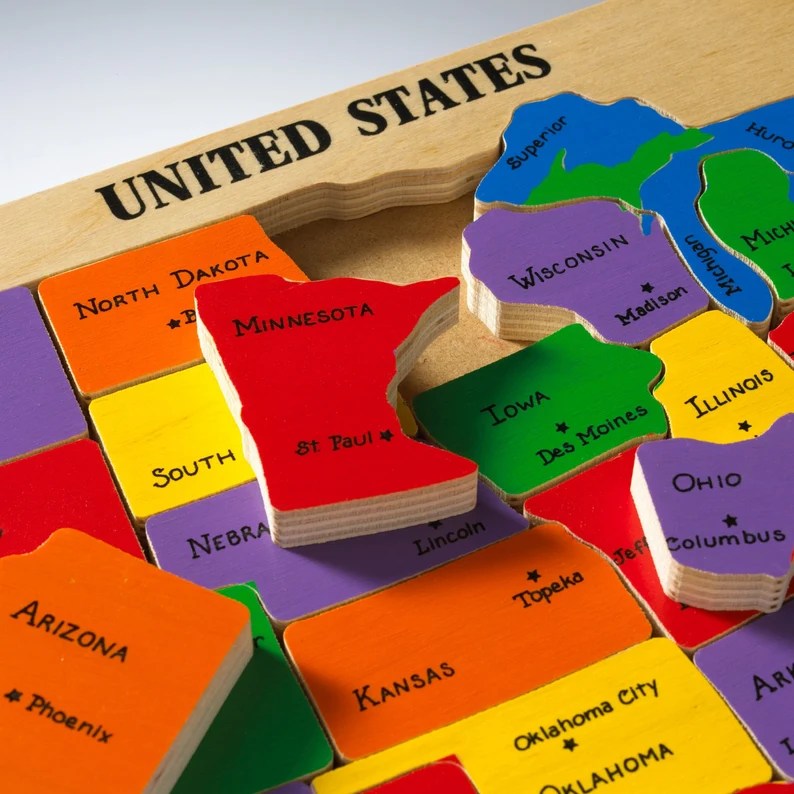
Are you ready to help put this place back together?
By Edward M. Bury, APR, MA (aka The PRDude)
The image above shows a puzzle map of the place I still want to call home. If you want to learn more about its origin and even purchase the puzzle, just visit this link.
I selected this image because it graphically depicts a place that is radically out of order and needs to be put back together.
Given the news that’s transpired — and you can make your own decision on what’s “news” these days — over the past eight or so months, I honestly don’t know how we have plunged into such an unrecognizable and mountingly caustic nation. And, what’s even more disturbing is that there are no immediate signs of any cohesive efforts to preverbally put all the pieces back into place.
In past posts over the years, I have raised the question: “What can public relations do?” Or to better clarify, how can the practice of ethical and strategic public relations help address a challenge or mitigate a threat.
Realistically, the gravity of the situation at hand is so profound and encompassing that it will take much more than effective communications to steer us down the road to some semblance of “normalcy.” What is needed? Man, I wish I had the answer.
On a seemingly daily basis, new affronts to our established democracy and way of life are not just contested, but rather obliterated. Like many, I do my best to enjoy the simple pleasure of just enjoying a regular day, something granted to those of us living in this place (well, to some or most of us), only to be bludgeoned when turning on the TV, flipping through emails, or visiting a social media platform.
An example. Earlier today, someone you assuredly know spoke at a meeting of a global organization that focuses its work on “the maintenance of international peace and security, the promotion of the well-being of the peoples of the world, and international cooperation to these ends.” That person uttered unsubstantiated insults, fabrications, and utter nonsense rather than any commentary supporting the foundation of said organization.
Perhaps a solution is to just follow that hippie-era phrase, “turn on, tune in, drop out.” Well, that’s pretty hard to do in this digital age.
So, I guess I’ll just keep trying to build awareness for the urgent need that all of us who really care about this place we call home have to keep working tirelessly to put the place back together again.
First, let me get this established before I move forward with this post, which incorporates a recent in-person academic-centered experience into an analysis of the advanced academic curriculum available to those who plan careers in public relations. I will not make any references to the specific time, institution, or location, nor will I share names of people, courses, or affiliated organizations.
In short, I am safeguarding the details of what I experienced and maintaining total confidentiality.
I joined another senior public relations professional on a two-day visit to a major state university to conduct interviews with administrators, faculty, staff, students, and alumni, and to observe and evaluate. Prior to our visit, my CEPR collaborator and I held a few zoom meetings to determine specific assignments and review the university’s previous CEPR report. Our assignment was to determine whether the institution should be recertified.
Before I move forward, let me share some insight into advanced education in the public relations field. Doing a quick Google search, I learned that Boston University granted the first public relations degree — way back in 1947! For some comparison, that was the year PRSA was formed. And, according to this U.S. News and World Report account, there are 368 institutions of higher education in the nation that offer a degree in public relations. Which university offers the most highly-rated program? That’s certainly up for debate!
Now, let me share a few CEPR statistics and insight, courtesy of Dr. Susan Gonders, co-chair of PRSA Educational Affairs Committee and coordinator of the CEPR initiative.
The first certifications were granted in 1990, and 14 universities were certified by 2006.
Dr. Gonders started working on behalf of CEPR in 2007; the number of institutions that earned the CEPR doubled to 28 certified by 2010.
Now there are just under 60 certified universities on five continents.
In the PRSA initiatives to better prepare the next generation of professionals, the primary mission of CEPR is to help PR programs improve. Therefore, the emphasis in the reports centers on recommendations for improvement.
The program is supported by the highest levels of PRSA leadership. To date, 15 past CEO/presidents have served as reviewers.
PR programs within all types of academic structures are eligible — such as business and communication studies — not just programs centered on journalism or mass communications.
With this as the foundation, here are some observations, thoughts, and conclusions gained during my involvement with CEPR earlier this year.
Commitment to Modern Public Relations Education. The university we visited had a long-established public relations curriculum and provided students with a first-rate physical environment and opportunities for valuable internships and capstone projects. Administrators, alumni, and students shared very positive perspectives on the overall PR program, while offering thoughts on improvement. It was apparent the university valued its role in educating the next generation of communicators. Furthermore, the institute demonstrated a commitment to advancing ethical standards and diversity.
In Step with the Profession Today. Perhaps the most enlightening — at least to me — aspect of the on-campus experience came as my colleague and I sat in on a public relations class. We observed the instructor guiding student teams on the strategies behind building successful communications campaigns while incorporating: a) A web platform to build and manage an online presence. b) Free open-source software to record, edit, and mix audio/visual content. c) An AI writing tool. For the record, I was not familiar with any of these digital tools, but recognize the intrinsic value of these kind of resources in modern communications.
And, In Conclusion. From a time commitment perspective, serving as a CEPR evaluator is, indeed, a commitment. The time on campus left little time for leisure, and we each spent hours of work prior to the visit and afterwards had to draft the final report. My co-evaluator, who had participated in CEPR in the past, asked if I would sign on for a future review: “Yes,” I said. “But not this year!” I gained a great deal of insight into the future of the profession, and I had an opportunity to participate in a challenging and noteworthy exercise. Plus, I gained Continuing Education Units toward my Accredited in Public Relations (APR) credential — which I successfully renewed earlier this summer!
Clearly, the public relations profession has greatly evolved since I began my career as a former news reporter who transitioned to become an agency account executive in the mid 1980s. Back then, media relations dominated the industry, campaigns often were not structured around research and sound strategies, and at times ethical practices may have been an afterthought. Based on what I learned and experienced through the CEPR experience, much of what was practiced decades ago is no longer part of the current agenda.
One final comment: Note the graphic at the top of this post. There’s one word — one that recently became a dominant part of the public relations lexicon. What is it?
Like me, did you cringe when reading this headline?
By Edward M. Bury, APR, MA (aka The PRDude)
The headline from a front-page story published in today’s Chicago Tribune certainly drove me to devour the entire piece in the print edition, which I always read while taking the CTA Blue Line el to work on many weekdays. Here it is: “Ex-Loretto Hospital exec wages bizarre PR campaign.”
You can read the article from this gift link I received.
While I applaud the Tribune for publishing this excellent and well-researched report from Jason Meisner, I would ask editors to please consider refraining from incorporating any reference to the practice of public relations when it’s quite clear — well, at least to me and hopefully many others in the profession — that a critical element of the article falls very, very far short of being accurate when concerning public relations.
As noted in the piece, a former Chicago-area healthcare executive was charged by federal prosecutors with embezzling some $300 million in non-existent COVID-19 tests at the height of the pandemic. The executive, who fled the U.S. last year after another theft indictment was filed, apparently has embarked on an effort to re-establish his “credibility” by claiming to have initiated a wide range of philanthropic “initiatives.”
These are outlined in this communications document— I will not refer to this unadulterated piece of garbage as a “news release” — which, as noted by the Tribune, contains not only glaring errors, but does not include statistics to substantiate the claims made. The weblink leads to a site that will be “Launching Soon.” The article also recounts previous communications from the alleged embezzler to altruistic programs that do not exist or are unsubstantiated.
One big question: Did an actual communications firm “craft” these messages?
I would share more, but my blood pressure already is on the rise.
Now, let me please reiterate to members of the news media and to anyone who will read the balance of this post:
The scope of the practice of public relations is centered around honesty, adherence to established ethics, and supporting an open disclosure of information. In essence, it’s about building awareness for, acceptance of, and action towards something that’s good or positive.
Individuals acknowledged as brutal dictators do not practice “public relations.” (The author of this documentneeds to be educated.)
There really is no such thing as “good PR” and “bad PR.” There’s positive media exposure and negative media exposure. Again, public relations is a communications practice.
This paperback version of Steinbeck’s non-fiction work features a subdued but inspirational cover.
Now, one month and a few days into the administration of the 47th president of the United States, I felt compelled to offer thoughts on the direction our nation is headed. My initial plan was to pose a range of light-hearted — but poignant and relevant — questions for the president.
An example: If the proposed tariffs on imported goods from Mexico are enacted, and the price of avocados soar, what replacement toppings would you recommend the hipster/foodie crowd put onto toast?
I drafted a few other potentially humorous questions, but came to the realization that it’s quite challenging to craft this kind of prose, especially when I believe the blitzkrieg rate of executive orders and appointments/firings now taking place across a broad scope of government will have potential cataclysmic outcomes for the democracy we now know. A post with a serious tone was needed; the crux of the message came unexpectedly.
A few days ago, a neighbor who I exchange books with dropped off a copy of John Steinbeck’s“Travels with Charley in Search of America,” a best-selling work published in 1962. I certainly knew about the story behind the author’s 1960 cross-country trek in a modified pick up truck accompanied by a French poodle. So, I began reading the work. I found Steinbeck’s writing — more introspective commentary on the state of the nation and the places and the people he encountered than purely travelogue — an engaging read.
Then, around halfway through the book, as the author was at the Continental Divide, he reflected on the purpose of his inland voyage and how he was “briefed, instructed, directed, and brain-washed by many of my friends.”
The paragraph continued: “One among them is a well-known and highly respected political reporter. He had been grassrooting with the presidential candidates, and when I saw him he was not happy, because he loves his country, and he felt a sickness in it. I might say further that he is a completely honest man.
“He said bitterly, ‘If anywhere in your travels you come on a man with guts, mark the place. I want to go to see him. I haven’t seen anything but cowardice and expediency. This used to be a nation of giants. Where have they gone? You can’t defend a nation with a board of directors. That takes men. Where are they?'”
From an historical perspective, Steinbeck took his trip in fall of 1960; that year pitted John F. Kennedy against Richard M. Nixon in the presidential election. I trust you know who won; and perhaps the outcome that November may have factored into the book.
Back to the excerpt above, I have no idea on the identity of the reporter referenced by Steinbeck. And, while “Travels with Charley” sold millions of copies, critics have cited that many of the episodes and conversations detailed during journey were fictional. Yes, he piloted and sometimes slept in a vehicle he named Rocinante, but he also spent many nights in lavish hotels with his wife, and Charley, of course.
Regardless of how one interprets the book, the short passage just presented resonated with me.
With seemingly daily headlines of mass layoffs of federal workers, projections of seizing foreign lands for monetary and political gains, assaults and threats against allies, leadership appointments of individuals with questionable experience and character to major federal departments, and other developments since January 20, I, too feel a “sickness.” I, too have witnessed “cowardice and expediency.” I, too look for the return of “a of nation of giants.”
Perhaps it’s somewhat ironic that the following post, which contains ten images and captions but just a few paragraphs as a narrative, centers on a place here in Chicago that honors and celebrates those who are recognized for their role in literature of all types. Perhaps there should be lots more words.
And, perhaps referring to these authors as “men and women of letters” is a trifle outdated and more appropriate for decades past — certainly in this digitally-driven place and time. But from this perspective, we still employ letters to construct words, sentences and paragraphs, despite the growing proliferation of emojis, images, and video in communications today.
So, without further ado (a phrase that emerged from another era), here’s the background. On April 4, I had the pleasure of attending “Ink + Impact,” a social gathering and casual discussion hosted by the Better Government Association. The theme of the conversation was “A Celebration of Journalism,” and while I didn’t take notes, one topic addressed certainly resonated: The continued dramatic loss of newspapers, especially in rural parts of the nation, and its impact on modern society across America. The BGA team recorded the conversation, which you can access from this link.
(The decline of newspapers certainly has been prevalent in recent years, and it was addressed in this space with a post published in February of 2023.)
But it was The American Writers Museum, the venue for the BGA evening event, that I focus on below. Full disclosure: I had not previously visited the museum, even though I certainly knew of its existence and its location in a vintage office building on North Michigan Avenue. Plus, a friend who works there gave me a comp admission pass a few years ago! As a “writer” of sorts, I should have made multiple pilgrimages over the years. Rest assured, I will return.
In the interim, please enjoy this “travelogue” to honor those Americans committed to the written word.
The “Ink + Impact” event drew a capacity crowd for the discussion on the state of journalism and access to the Museum.
Not much to add to the message on this panel; to employ a cliché — it speaks volumes.
One of the many way cool features of the Museum: An interactive display that provides a blueprint of sorts on how literature is made. Somewhat fitting that a copy of the masterful prose poem by one of Chicago’s most revered writers — one who maintained he never received the respect he deserved — was found in a somewhat disheveled conditioned. Both Chicago icons from the same era. We received the Chicago Sun-Times while I was growing up, so I certainly was familiar with Ann Landers. And, back in the 1980s, while working at a PR firm located in the 303 E. Wacker Dr. office building, I shared an elevator ride with Studs Terkel; I was somewhat stunned and could only say, “Hello.”Next to Nelson Algren, Bellow is my favorite Chicago author. Like Algren, he set many of his fictional works in and around Chicago. One commonality between Algren, Bellow and myself: We all lived for a time in or around the former Eastern European immigrant enclave of what’s defined by the city as West Town. This display features the tool many writers employed since its invention some 150 years ago. Those of us who used to compose on a typewriter — whether in a noisy newsroom or alone — can perhaps still hear the somewhat symphonic sounds.This main gallery features interactive profiles on American writers representing all genres and spanning the early years of the nation to today. Well said. And, let me add from cities and towns from north to south, from east to west and everywhere in between. This colorful display highlights a current exhibit, “Dark Testament: A Century of Black Writers on Justice,” housed in the Meijer Gallery and Roberta Rubin Writers Room. (Try to say that last name fast five times!)
This handy calendar offers motivation, prompts, wisdom and more. Who knows: Maybe one of my quotes will be on the 2020 edition.
Looking back at the holiday season passed, I was fortunate to receive some outstanding gifts, from the intangible (moments shared with family and friends) to the tangible (a couple of six packs of some really good beer).
But assuredly, the most poignant — and hopefully most useful — gift found under the proverbial tree was a desk calendar.
As noted in the accompanying image, my calendar will offer “Inspiration, writing prompts & advice for every day of the year.”
By reading this post, it’s readily apparent that I write stuff, from commentary on public relations, politics and popular culture to travelogues and people profiles. With a career in public relations, marketing and journalism spanning (yes, hard to believe) four decades, there are a lot of other genres I could include within print digital and broadcast.
Back to the present, the most challenging writing projects completed recently were required assignments in my pursuit of a master’s degree in English. For the Theory, Rhetoric and Aesthetics course completed in December, I submitted a paper, “The Growth of a Post-Truth World in Modern Society.
To summarize the essay: Exceptionally challenging and equally rewarding, as I had to analyze early twenty first century perceptions of truth and falsehood while balancing beliefs presented by Plato and a twentieth century thinker. Heady stuff, indeed.
For the spring 2019 semester, I pivot resoundingly in another direction: Novel workshop.
Yes, I will begin — and hopefully finish — a novel by May. What’s the plot? Who are the characters? What do I hope to accomplish? We’ll find out in a few months.
Should I need inspiration, I will read, savor and gain from the messages displayed on the little calendar on my desk. Then, I’ll get back to work.




 Prdude's Blog